The usual rule in any legal matter is that two spouses are treated as the same entity by virtue of their marriage. Typically, when spouses file joint tax returns, each one of them is jointly and severally liable for the tax debt that the couple owes. Even if the couple were to get divorced, the IRS can theoretically come after each of the spouses to force them to pay the tax debt. In some instances, the application of this rule can lead to unfair consequences for a spouse who may not have even known of the situation.
The complicated laws and protections make it important to discuss your situation with a New York tax lawyer from The Thorgood Law Firm.
Why Did Congress Pass the Innocent Spouse Rule?
The Innocent Spouse Rule was created by Congress as part of the Internal Revenue Code. The law is found in 26 USC 6015. The rule provides a safe harbor for a spouse who was not a part of their own spouse’s misconduct or error, but would still bear the consequences of their actions. At the time Congress passed the law, they sought to protect wives from the actions of their erring husbands. Of course, the law applies equally to both spouses, provided that they meet the requirements of the rule.
How Does the Innocent Spouse Rule Work?
The law states that a spouse can claim relief under the rule, so long as the following apply:
- The two spouses filed a joint return
- There was an understatement of tax obligations because one spouse made an error in reporting their income
- The other spouse, who also signed the return, did not know about the error or underreporting at the time it was made
- It would not be fair to hold the spouse who did not make the error responsible for the actions of the other spouse
- The spouse who is seeking relief under the rule attempts to avail themselves of the protections of the rule within two years of the date that the IRS tries to begin collection actions
If the spouse is able to successfully show that the requirements of the rule apply, they would not be liable for the debt. Instead, it would be the spouse who made the error who is solely responsible to pay any tax debt and penalties to the IRS.
Innocent spouse relief is only available to those who live in states that apply the community property rule. Typically, this rule applies in divorces. It states that all marital property is jointly owned by both spouses. In the event that the marriage ends, the spouses will split marital property on a 50/50 basis. California is the largest state in the country that applies the community property rule.
The IRS Is Generally Stringent About Applying the Innocent Spouse Rule
It is by no means a given that the IRS will automatically accept your claims that you are entitled to innocent spouse relief. You can expect them to dig deep into the facts and circumstances of your case to determine whether you truly did not know about what your spouse was doing. In some cases, the IRS denied innocent spouse relief, and you would be forced to fight the agency in tax court. Then, it is also not certain that a tax court would rule in your favor.
For example, in the recent Tax Court case of Lisa Marie Walsh v. Commissioner, the spouse who was claiming innocent spouse relief was unable to successfully show that she qualified under the law. The court took a deep look at the facts of the case and determined that the spouse actually knew about potential tax reporting issues, even though she claimed that she did not know how to read a tax return. Here, the court seized on the fact that she had spoken with an attorney during the pendency of a prior tax collection action when her spouse had also underreported the income. She knew about the couple’s history of noncompliance with tax laws and was unable to claim that the spouse was underreporting income without her knowledge.
Why You Need a Tax Lawyer to Help You Claim the Innocent Spouse Rule
Accordingly, it is vital that you, as a spouse, do what is in your power to protect yourself. You may be unable to claim innocent spouse relief if you show that you did not know what was happening, if the facts and circumstances say otherwise.
To qualify for innocent spouse relief, you must do the following:
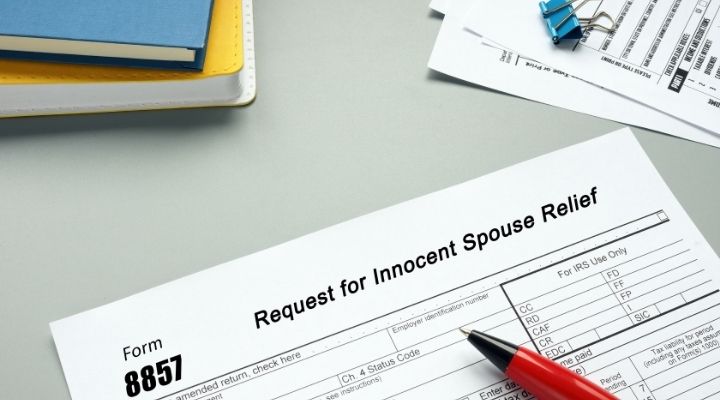
- Complete IRS Form 8857 to request the relief
- Provide records to the IRS that document your situation, including the divorce decree and any relevant financial records
- Allow for the IRS to review your case and either grant or deny your request
- Appeal to the Tax Court if necessary if your request for relief has been denied
Since innocent spouse relief typically comes into play in a case involving divorce, you should get help from a skilled tax lawyer if you have come to learn if there is a history of issues with the IRS. What you may say on your own to an IRS agent can come back to haunt you in the future if you are trying to claim innocent spouse relief. You should let a tax lawyer speak for you in this circumstance. They know how to present your case to the IRS. Although hiring a tax attorney is not a guarantee that you qualify for innocent spouse relief, it can certainly improve your chances.
Contact a New York Tax Lawyer Today
If you are facing tax disputes, IRS audits, or need guidance on complex tax matters, The Thorgood Law Firm is here to protect your financial future. Our experienced New York tax attorneys understand how to handle the IRS and state tax authorities while fighting to secure the best possible outcome for you. Do not let tax issues overwhelm your life. Contact The Thorgood Law Firm online or call us today at (212) 490-0704 for trusted legal support and skilled representation in all areas of tax law.